Narrow Garden Ideas for Long or Skinny Yards: Creative Ways to Maximize Your Space
Long, narrow yards are common for many homes. They can feel awkward to design.
You might worry your skinny outdoor space looks like a hallway or just feels cramped for plants and seating. These challenges are totally normal if you’ve got a thin plot.
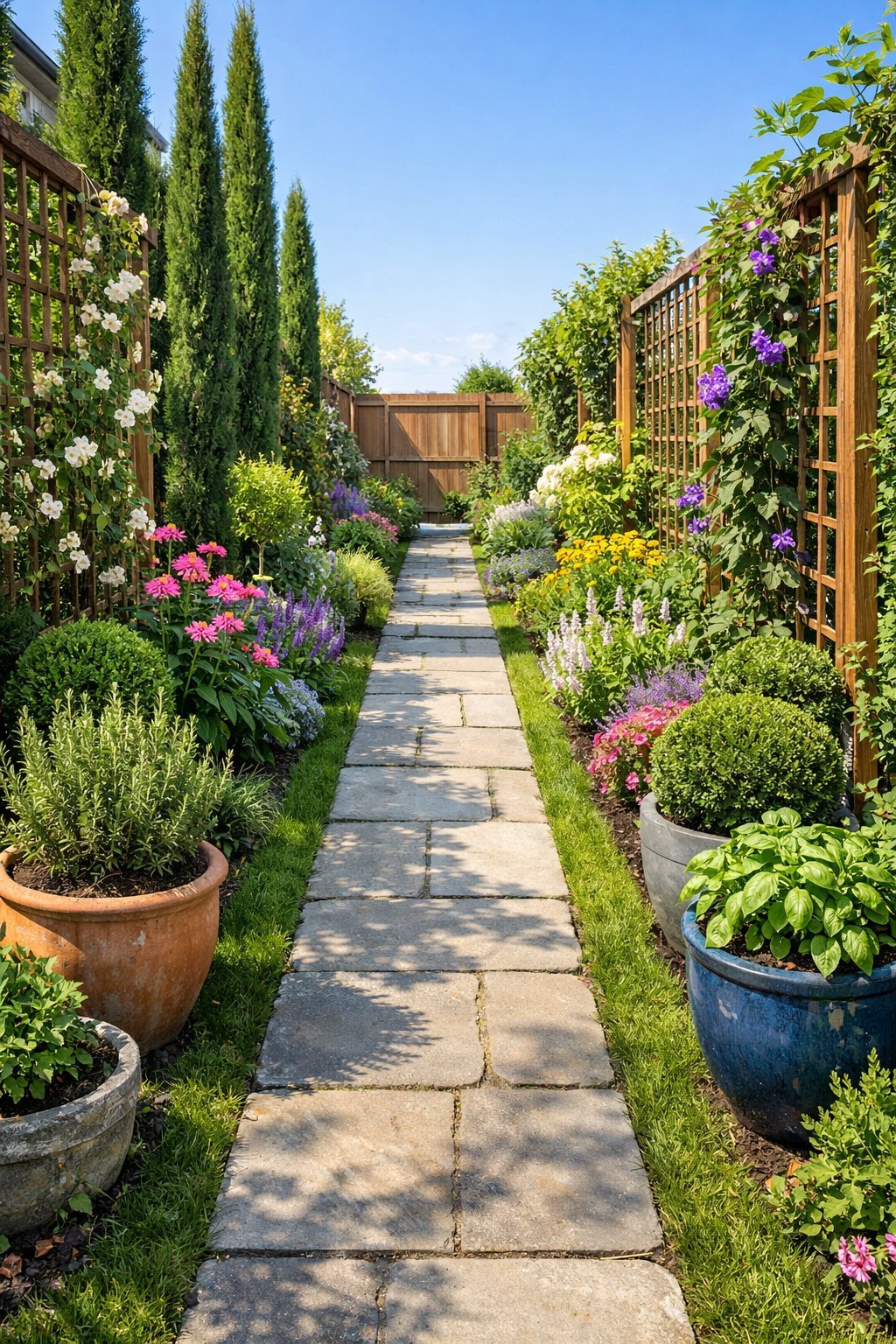
Your narrow garden can become a beautiful and functional outdoor space with the right design tricks that make it feel wider and more inviting. Simple changes like adding pathways, using vertical space, and placing furniture wisely can really transform how your yard looks and feels.
You can create different zones and add privacy. There’s plenty of room for plants, even in a tight area.
Table of Contents
1. Create a winding stone path to add visual interest and guide visitors
As an Amazon Associate I earn from qualifying purchases.
A curved stone path works perfectly in narrow yards. It makes the space feel longer than it is.
The gentle curves draw your eye through the garden instead of just straight to the end. Stone pathways add both structure and flow to your outdoor space.
You can use flagstone, cobblestone, or stepping stones, depending on your style. The winding design also lets you tuck in small planting areas along the edges.
This adds depth and makes your narrow yard feel more like a garden room.
2. Install vertical garden walls using flower baskets and creepers
Vertical gardens help you grow plants upward instead of outward in narrow spaces. You can use wall-mounted containers or specialized planting pouches that attach easily to fences or walls.
Fill your containers with potting soil that drains well. Add trailing flowers and creeping plants that grow downward for a fuller look.
These living walls work great indoors or outdoors. They turn boring walls into green focal points and give you more planting space without crowding the ground.
3. Use gravel or pebble walkways to keep the space light and airy
Gravel and pebble walkways are perfect for narrow gardens. They don’t take up much visual space.
Unlike solid concrete or dark pavers, these materials let light bounce around and make your yard feel more open. You can lay a budget-friendly gravel path yourself without special skills.
The loose stones create a soft, relaxed look that works with any garden style. Pebble gardens are low maintenance and won’t overwhelm your narrow space.
4. Plant tall, narrow trees along fences for privacy without crowding
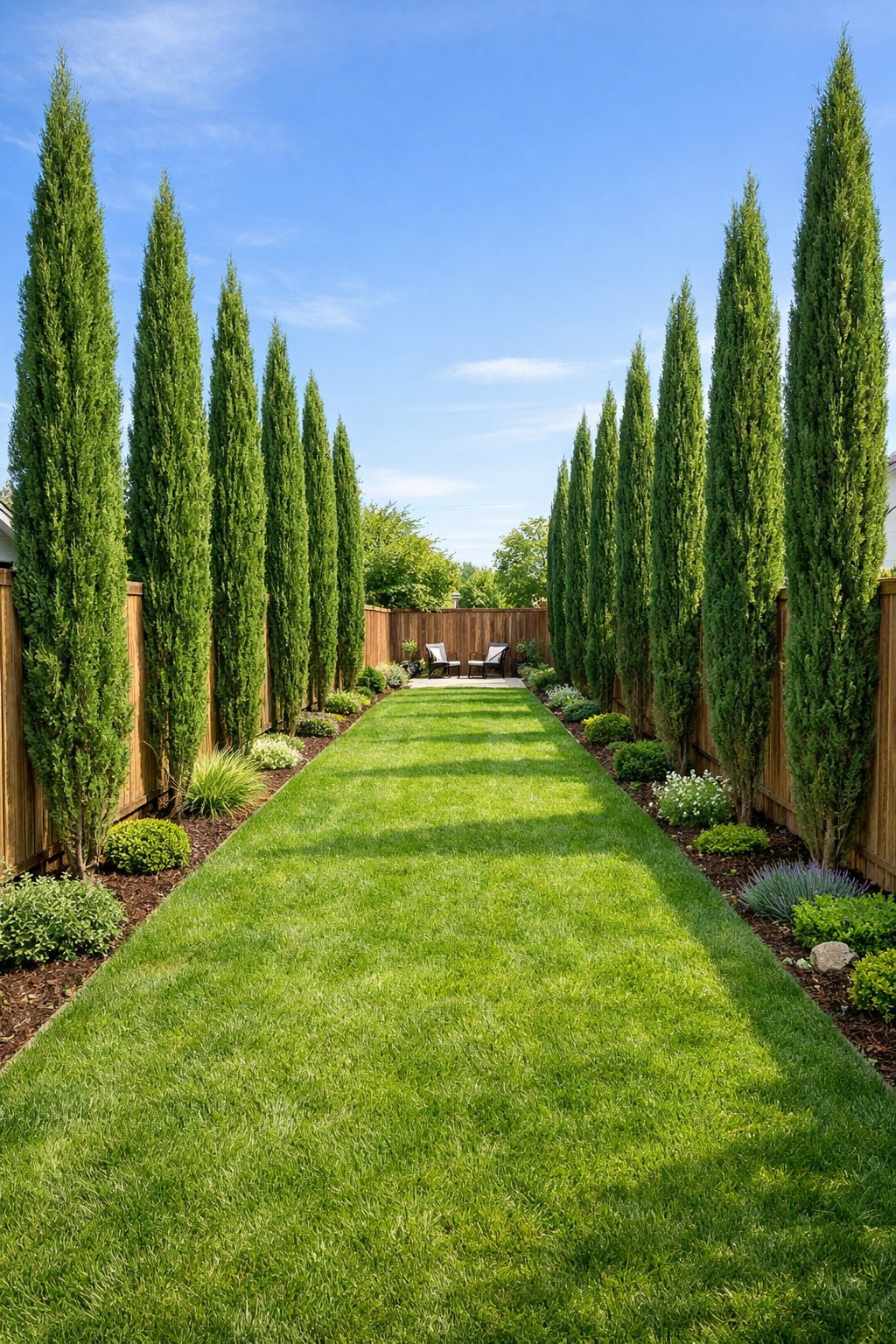
Tall, narrow trees create a natural privacy screen without eating up much space. They grow upright, not wide, so you get coverage where you need it most.
Italian Cypress works great for this. You can plant them 3-4 feet apart along your fence, and they’ll reach 40-60 feet tall but stay only 3-4 feet wide.
These trees add greenery and block unwanted views from neighbors. They’re perfect when every foot of space matters.
5. Add a cozy seating area at the far end to draw the eye forward
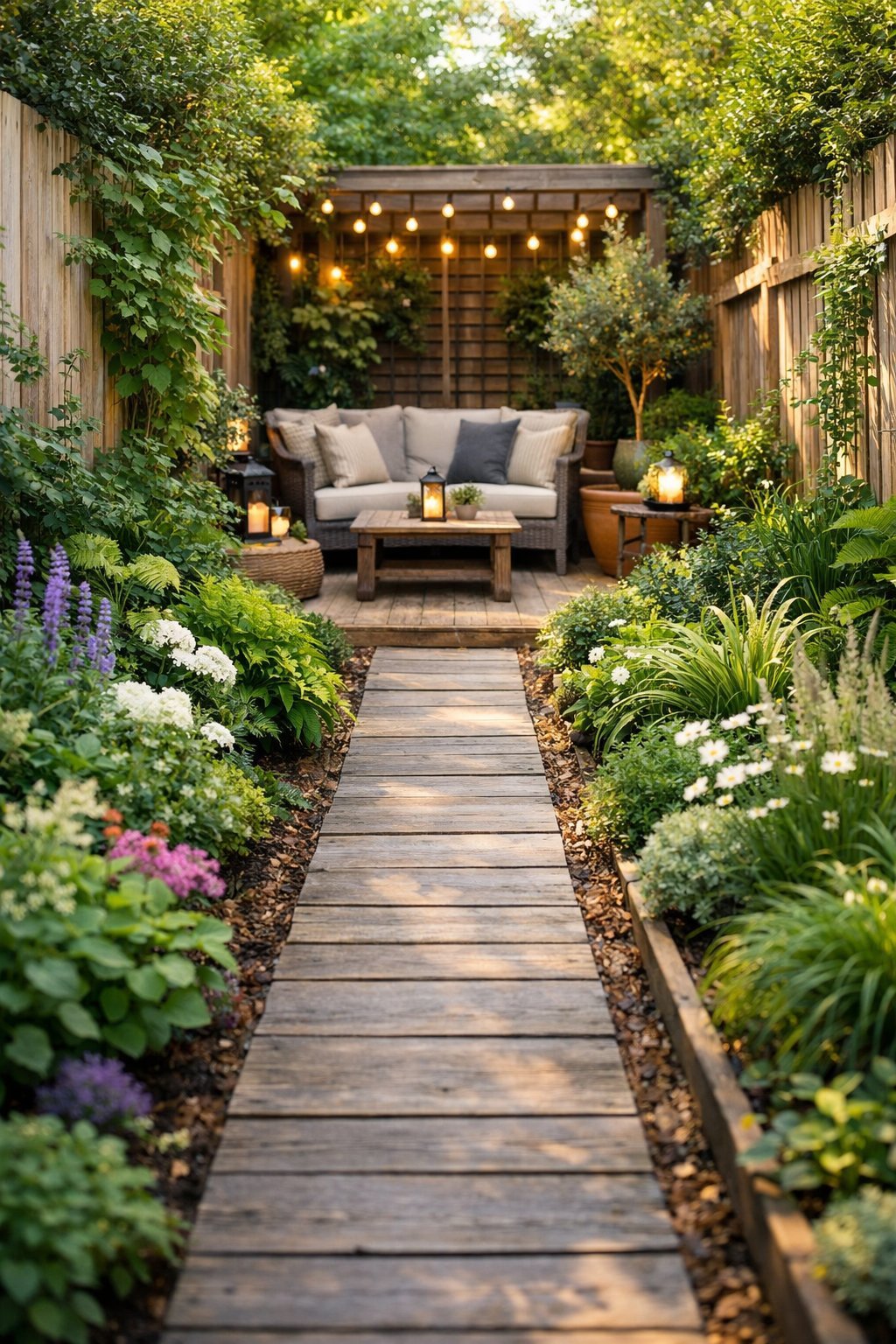
Placing a seating area at the far end of your narrow yard creates a focal point. It draws the eye forward and makes your space feel longer.
A small bench or built-in seat works well. Toss on some comfy cushions and add a few potted plants to make it more inviting.
This seating arrangement naturally anchors your garden. You’ll have a destination worth walking toward.
6. Incorporate multi-functional furniture like benches with storage
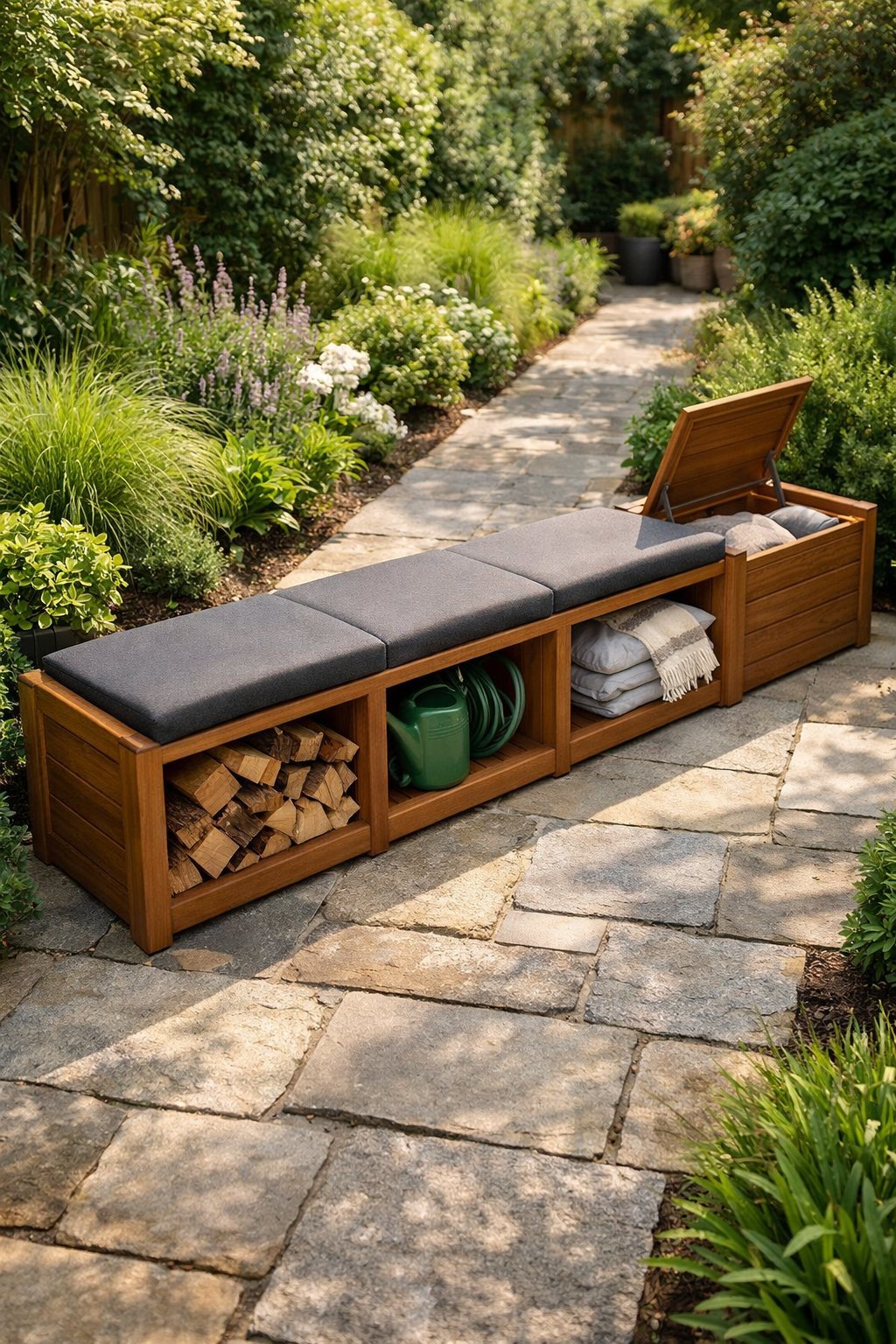
Narrow yards need smart furniture. Benches with built-in storage let you sit comfortably while hiding cushions, garden tools, or outdoor toys underneath.
Look for folding tables and stacking chairs you can tuck away when you don’t need them. These pieces adapt to different activities.
Consider ottomans that convert into extra seating or tables that double as coolers. This approach helps you maximize every inch and keep things organized.
7. Use raised garden beds along the edges to define planting zones
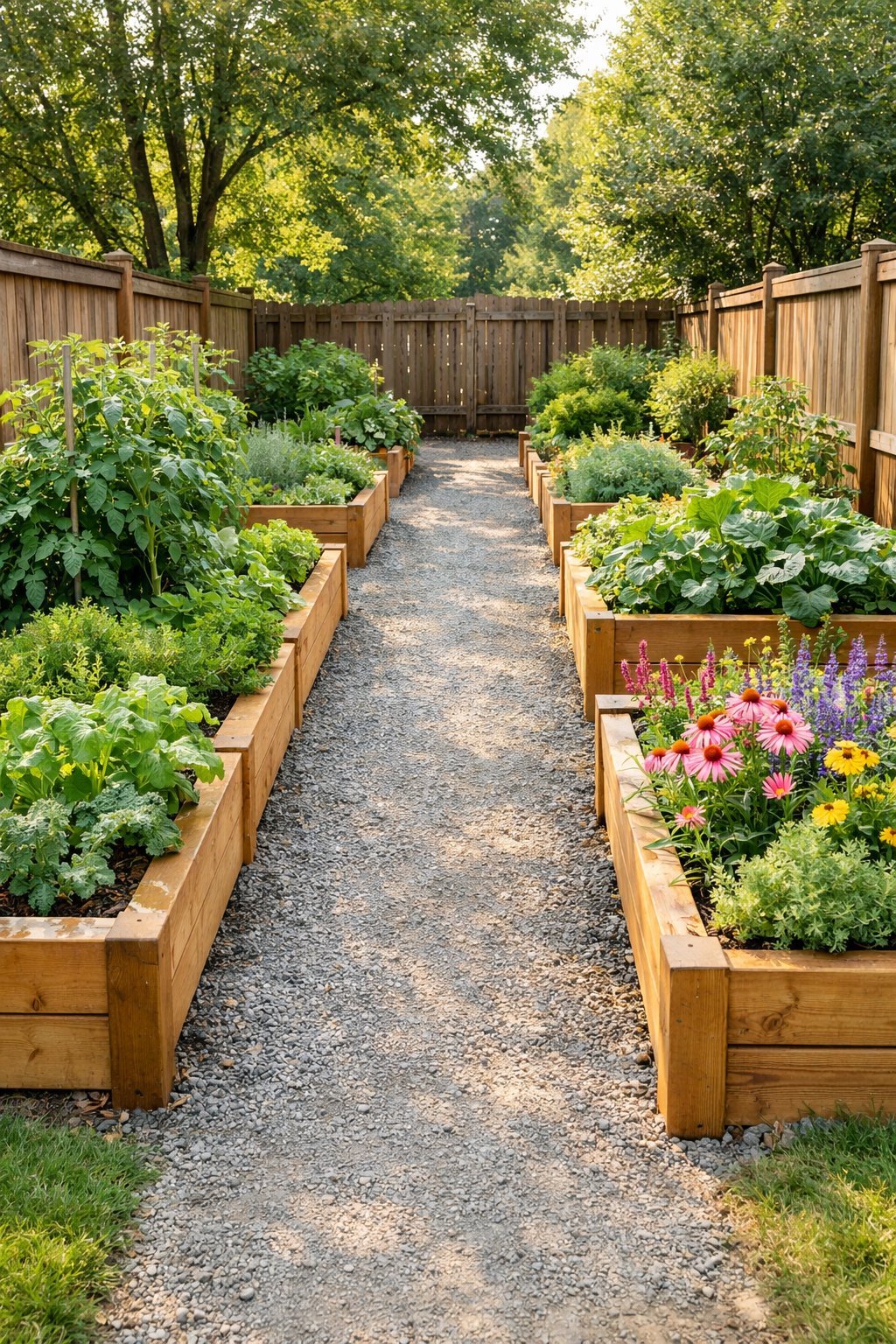
Placing raised beds next to a fence lets you use your yard’s perimeter. You can create clear boundaries and keep the center pathway open.
These beds are easier on your back and knees than ground-level gardens. They also give you better control over soil quality and drainage.
Position beds along one or both sides to maximize growing space. This keeps your garden organized and accessible.
8. Hang colorful blooms on trellises to brighten vertical spaces
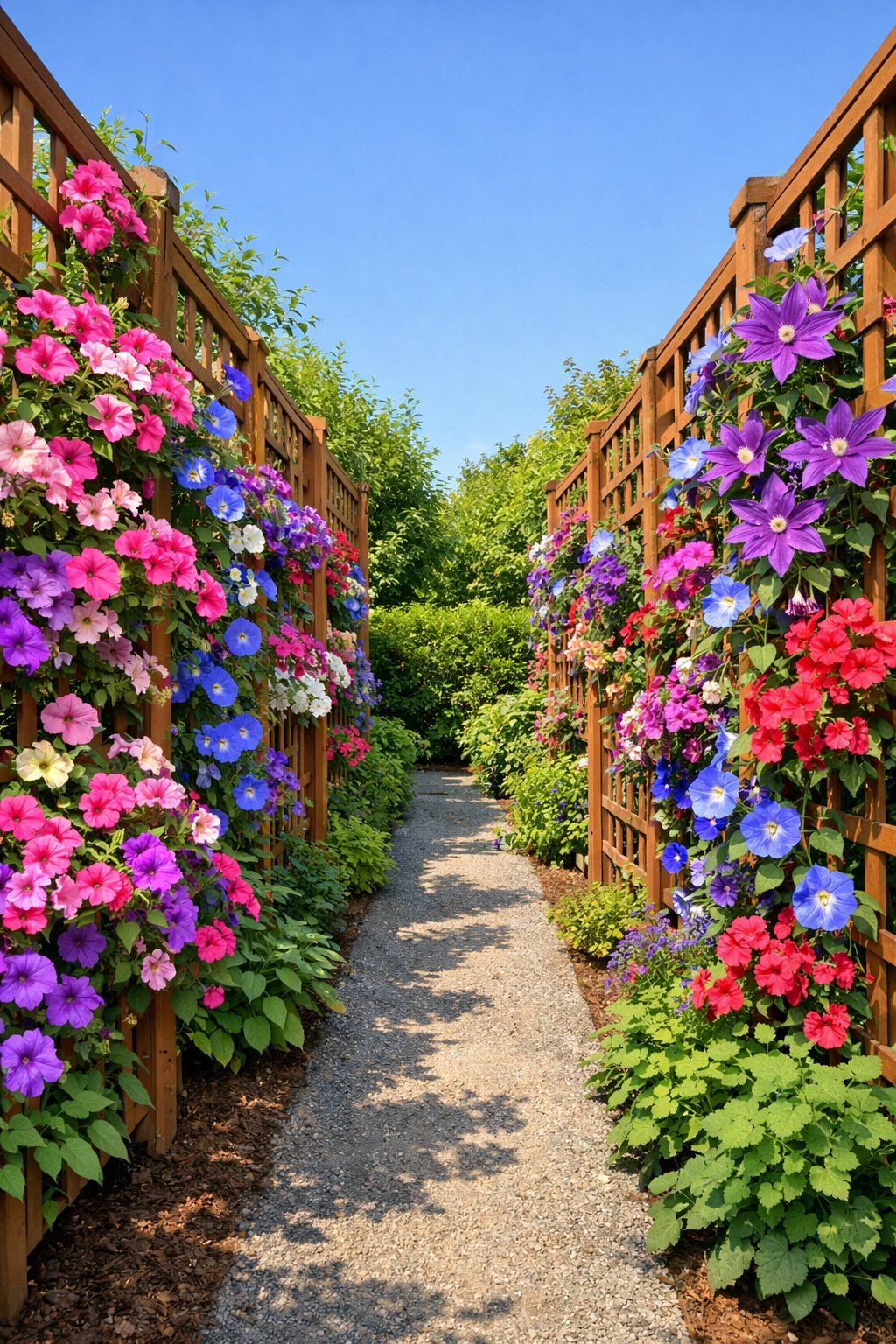
Trellises turn narrow gardens into stunning vertical displays. You can add structure and beauty with a trellis while saving ground space.
Choose climbing flowers like roses, clematis, or morning glories. These plants grow upward, which works perfectly for skinny yards.
Mount your trellis against a fence or wall for a space-saving vertical garden. You’ll get color at eye level without losing precious floor space.
9. Introduce mirrors on fences to create an illusion of width
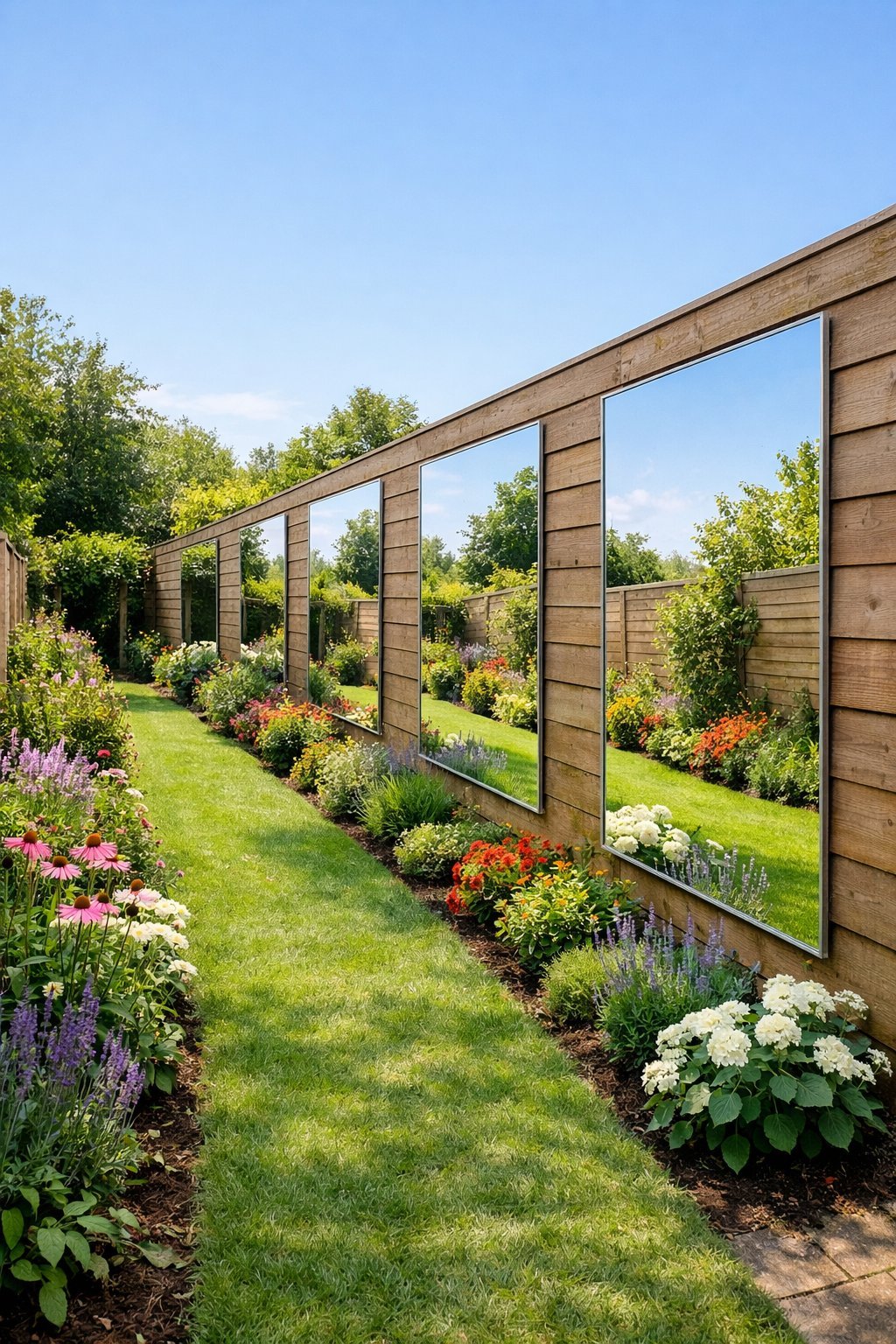
Hanging outdoor mirrors on fences instantly makes your narrow yard feel wider. Mirrors reflect light and greenery, tricking your eye into seeing more space than you really have.
Mount mirrors horizontally along your fence for the best effect. This creates the feeling your yard extends beyond its real boundaries.
Pick weather-resistant outdoor mirrors that can handle rain and sun. Place them to reflect your prettiest plants or pathways, not blank walls.
10. Use alternating planting patterns to add texture and depth
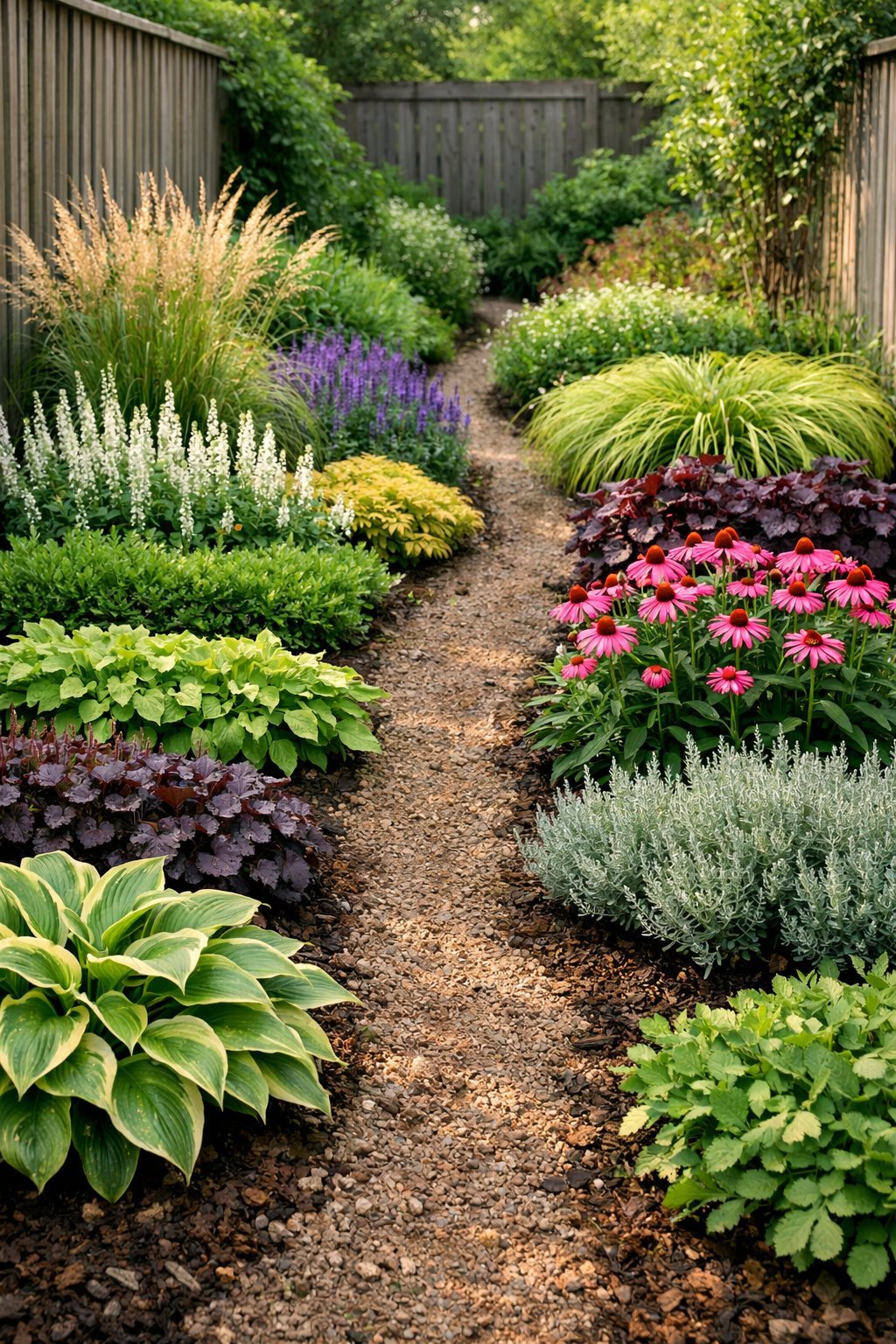
Alternating your plants adds visual interest in narrow spaces.
Try arranging flowers and shrubs in a zigzag instead of just sticking to straight lines.
Strategic plant placement can help you build up natural-looking layers.
Mix tall plants with shorter ones, but stagger them—it really makes your garden feel wider.
Group plants in odd numbers like threes or fives.
This trick gives your space a more organic look and draws your eye around, almost like nature intended it that way.